
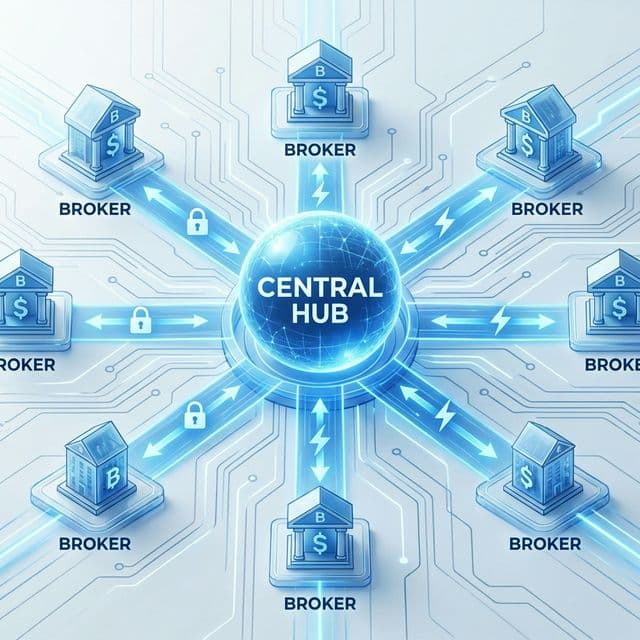
Multi-broker order routing
Multi-Broker Order Routing for Zerodha, Angel One, and IBKR
Centralize execution across broker accounts so your team can reduce single-broker dependency and monitor orders, exposure, and failures from one place.
Search intent fit
Built for the query users are actually searching
Each page now names the broker, workflow, and risk problem clearly, so Google has stronger title, heading, and body text to match against commercial searches.
Broker redundancy
Plan fallback, pause, or reroute behavior when a broker API is unavailable or does not pass pre-trade checks.
Unified order log
Keep strategy, broker, account, status, and failure reasons visible in one execution record.
Account-aware routing
Route by instrument, account, margin rule, strategy type, or manual approval requirement.
Who this is for
Clear audience signals for buyers and Google
The page now explains who should click, what the workflow covers, and which operational checks matter before any trading system is used with live capital.
Trading teams running more than one broker account
Portfolio operators who need consolidated execution monitoring
Founders and desks reducing operational dependency on one broker API
Supported workflow
Broker and integration coverage
Broker names are visible on-page because commercial searches often include specific broker intent.
Risk controls
Controls before execution
Trust-heavy finance pages need to show the limits, checks, and assumptions behind a product workflow.
Demo workflow
What the demo should prove
The demo path gives sales and Search Console testing one clear promise: show the actual workflow from idea to controlled execution.
- Step 1
Order request
- Step 2
Account and broker checks
- Step 3
Routing rule
- Step 4
Risk gate
- Step 5
Broker API submission
- Step 6
Status and reconciliation
Fair comparison
Routing layer vs broker-native APIs
Broker-native APIs are useful for direct execution in one account. A routing layer becomes useful when the same strategy, operator, or risk policy must work across multiple broker accounts with consistent monitoring.
Frequently asked questions
Does multi-broker routing add latency?
Any routing layer adds some processing, so Radii focuses on keeping checks intentional: reliability, account fit, and risk control where those benefits outweigh the added step.
Can manual and automated orders use the same routing layer?
Yes. Teams can configure hybrid workflows where manual approvals and automated strategies pass through the same broker-aware checks.
Can one broker failure be automatically bypassed?
It depends on the strategy and compliance rules. Some workflows can reroute; others should pause or require manual review when a broker fails.
Broker routing depends on broker API terms, market status, account permissions, and exchange rules. Redundancy reduces operational risk but cannot remove execution risk.
Ready to review the workflow?
Bring the broker, strategy, and risk-control questions you want answered.
Discuss Broker Integration