
Indian IT Sector Trends in 2026
Author and methodology
Radii Labs
Quantitative research and trading technology team
Radii Labs publishes research on market structure, quantitative workflows, broker connectivity, and risk-managed algorithmic execution for Indian and global markets.
Methodology: Research is reviewed for query intent, practical usefulness, and financial risk clarity before publication. Market articles separate observations from predictions and should not be read as investment advice.
This article is educational and operational research. It is not investment advice, and past or backtested performance does not guarantee future results.
For risk-managed execution
Add risk checks before live orders
Define loss limits, position sizing, exposure caps, approvals, and kill-switch behavior before deploying trading workflows.
Review Risk ControlsFuture Trends of the Indian IT Industry (2026)
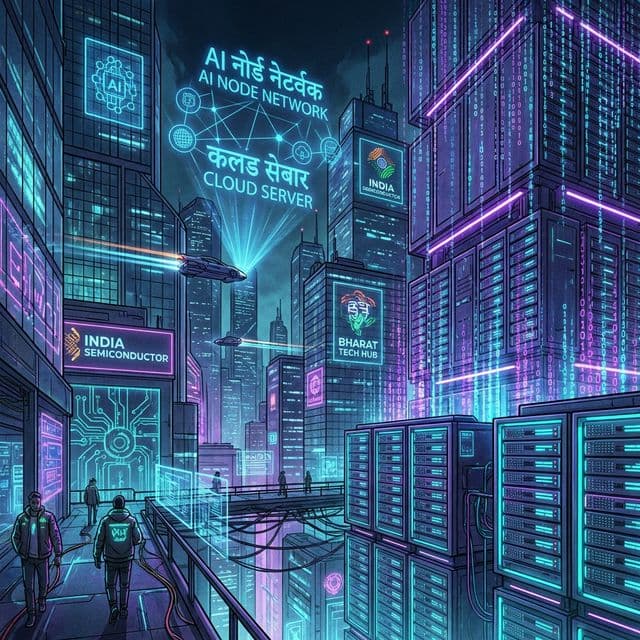
The narrative of "Indian IT = Service Export" is officially dead. In 2026, India is the world's AI Engineering Hub. The shift from legacy maintenance to building "Agentic AI" systems has redefined the sector.
At Radii Labs, we see three distinct trends separating the winners from the losers this year.
1. The Rise of "Nano GCCs" 🏢
Global Capability Centers (GCCs) are no longer just massive campuses in Bangalore. The trend for 2026 is Nano GCCs—specialized centers with 50-150 elite engineers focused on high-impact niches like Chip Design, AI Governance, and Quantum Security.
- Data Point: India now hosts 1,850+ GCCs.
- The Shift: These centers are "Innovation HQs," not back-offices. They are hiring for product ownership, not just execution.
2. The "AI Hypercomputer" Era 🤖
Mid-cap IT firms are outperforming large-caps by pivoting faster to Sovereign AI.
- Sovereign-First Cloud: With data privacy laws tightening, Indian enterprises are building local "AI Hypercomputers"—infrastructure located physically in India to train models on sensitive financial/healthcare data.
- Agentic AI: We are moving beyond chatbots. 2026 is the year of Agents—AI that doesn't just talk, but does (e.g., executing trades, filing taxes).
| Trend | 2024 View | 2026 Reality |
|---|---|---|
| Model | SaaS (Software as a Service) | MaaS (Model as a Service) |
| Hiring | Mass Campus Recruitment | Just-in-Time Niche Hiring |
| Growth | Volume-driven | Value-driven (non-linear) |
3. The Mid-Cap Resilience 🚀
While the giants struggle with legacy baggage, mid-cap IT stocks (like Persistent, Coforge, and KPIT) have delivered superior alpha.
- Why? They bet early on Automotive AI and Healthcare Data verticals.
- Investment View: Look for companies with >40% revenue from "New Tech" (AI/Cloud/Edge).
4. Hiring: The "Skill Over Degree" Paradigm
The impending "talent cliff" is here. There is a projected shortfall of 1.4 million AI professionals by late 2026.
- Hot Skills: Prompt Engineering, Edge AI, Quantum Cryptography.
- Cold Skills: Generic Manual Testing, Basic L1/L2 Support.
Conclusion
The Indian IT sector isn't slowing down; it's mutating. The companies that survive 2026 will be those that treat Code as a Commodity and Intelligence as the Product.
Related research
Keep exploring this topic
Algo Trading
Cross-Broker Algo Trading Platforms in India
Compare Indian algo trading platforms for broker support, no-code workflows, automation limits, and execution controls.
Global Market News
Global Events and Indian Market Impact in 2026
Understand how interest rates, geopolitical risk, and global capital flows may affect Indian market positioning in 2026.
Diversification
Portfolio Diversification Strategies for Indian Investors
Learn practical diversification frameworks for Indian investors across equities, fixed income, gold, and alternative assets.
Next workflow review
Move from reading to execution planning
Add risk checks before live orders
Define loss limits, position sizing, exposure caps, approvals, and kill-switch behavior before deploying trading workflows.